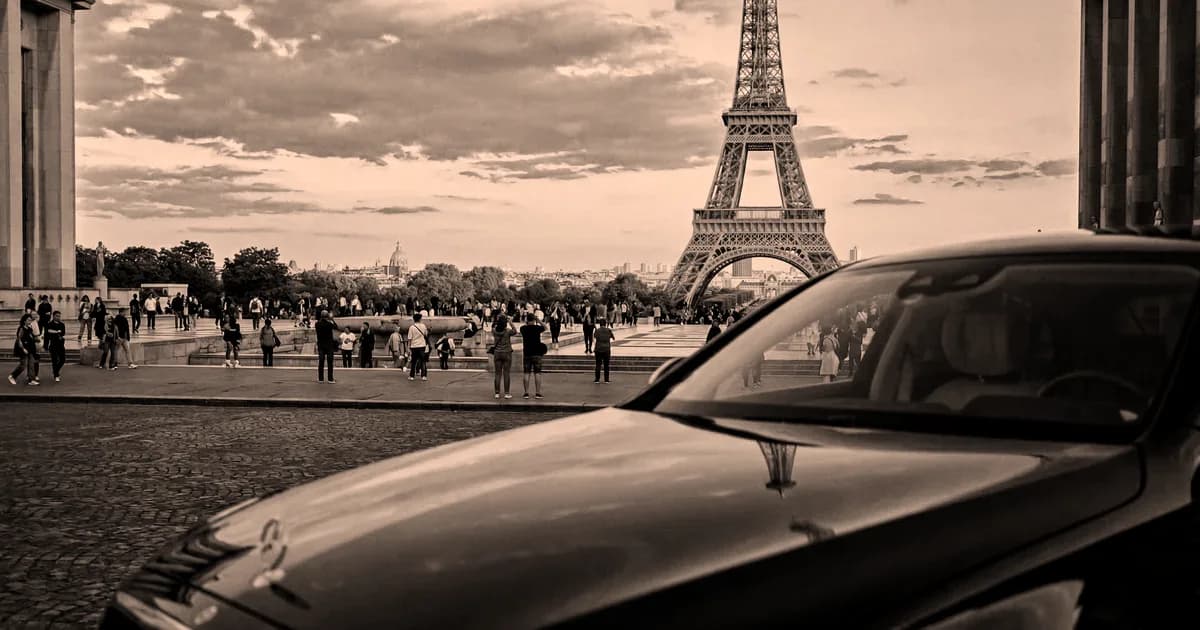
Seventy-two hours in Paris is not enough. It never is. But it is enough to understand why people return, provided you spend the time correctly. The difference between a good three-day trip and an outstanding one is rarely the places you visit. It is the time you save not waiting in queues, not arguing with navigation apps, and not carrying luggage between RER stations.
What follows is a 72-hour itinerary designed around the logistics of a private chauffeur in Paris, with real opening hours, real transfer times, and the insider sequencing that makes Paris yield itself properly.
Before You Arrive: Three Bookings to Make Now
The Paris of 2026 requires pre-booking in ways it did not five years ago. Three reservations to confirm before you leave home:
Musée d'Orsay timed-entry ticket. Book at musee-orsay.fr. Since March 2026, even Museum Pass holders must reserve a time slot online. Without one, expect 60 to 90 minutes in the queue. Price: €16 adult, free for under-26 EU residents.
Sainte-Chapelle skip-the-line slot. €15 adult. The 13th-century stained glass at Sainte-Chapelle is one of the most transcendent things in Europe; arriving without a pre-booked slot to discover an 80-minute queue is a specific kind of regret.
One special dinner reservation. Whether Le Grand Véfour, Septime, or Le Cinq, the best tables in Paris book three to six weeks in advance. This is the dinner that defines the trip.
Day 1: Arrival, Right Bank, Seine, Palais Royal
Morning Arrival at CDG or Orly (assume 10:00 landing)
Your PrivateDrive chauffeur meets you in the arrivals hall with a name board. Flight tracking means they adjusted for any delay automatically. The vehicle is a Mercedes E-Class or equivalent. CDG transfers start at €150, Orly at €120, fixed price, no surprises.
Transfer time: CDG to central Paris runs 35 to 50 minutes. Orly: 25 to 40 minutes. The 1st, 2nd, and 4th arrondissements put you within walking distance of everything on today’s programme. Drop luggage at the hotel, freshen up. Thirty minutes.
12:30, Lunch at the Palais Royal Gardens
The Palais Royal is one of Paris’s great open secrets: a colonnaded courtyard garden five minutes from the Louvre, with excellent restaurants in its arcades. Café Kitsuné or Le Grand Véfour (book ahead) sit on the perimeter. The Daniel Buren columns in the courtyard are obligatory photography.
Transfer: walking from a 1st arrondissement hotel, or a ten-minute chauffeur drop at Rue de Rivoli.
14:00, Musée du Louvre
The Louvre contains 35,000 works on display across 72,735 square metres. You cannot see it all. You should not try. Since January 2026, tickets cost €32 for non-EU visitors (up from €22), while EU residents still pay €22. The new ticketing system also limits visit duration, so plan accordingly.
Wing priority: Denon Wing first. Winged Victory, Venus de Milo, Mona Lisa, all before the afternoon crowd surge. Then the Apartments of Napoleon III on the first floor of the Richelieu Wing, almost always quiet, extraordinarily ornate. Duration: two to two and a half hours focused, four-plus for enthusiasts.
Transfer: a five-minute walk from Palais Royal, or the driver drops you at the Pyramid entrance.
17:00, Tuileries Garden to Pont de la Concorde
Walk west through the Tuileries to Place de la Concorde. Thirty-five minutes at leisure. The Grand Roue observation wheel at the Concorde offers an elevated view over the city when it operates (seasonal). Cross Pont de la Concorde to the Left Bank for the late afternoon.
19:30, Seine Riverside Walk
The quays along the Left Bank at dusk, Quai Voltaire and Quai Malaquais, rank among the finest urban walks in the world. The bouquiniste booksellers close around 19:00; in April and May, the light holds until 20:30 or later. PrivateDrive picks you up at Quai Voltaire for dinner.
20:30, Dinner
For a first-visit dinner that is neither tourist trap nor impossibly precious: Septime (11th arr., natural wine, modern French, book three to four weeks ahead) or Restaurant David Toutain (7th arr., creative tasting menu). Both require advance reservation and represent contemporary Paris cooking at its sharpest.
Day 2: Left Bank, Montmartre, the Marais
08:30, Sainte-Chapelle (First Entry Slot)
Book the 09:00 slot. The upper chapel’s fifteen stained glass windows, dating from 1248, occupy 600 square metres of glass and filter morning light into the interior in ways no photograph captures. Thirty to forty minutes, unhurried at this hour.
Transfer: PrivateDrive from hotel, drop at Île de la Cité. Parking near Sainte-Chapelle is minimal; the driver waits or circles.
09:45, Île Saint-Louis Coffee and Walk
Cross the footbridge (Pont Saint-Louis) to Île Saint-Louis, Paris’s most intact 17th-century residential island. Berthillon ice cream (opens 10:00, cash only) has been an institution since 1954. The island takes twenty minutes to walk entirely: no museums, no queues, just beautiful streets.
11:00, Musée d'Orsay
Pre-booked timed entry. The Orsay’s collection of Impressionist and Post-Impressionist painting, Monet, Renoir, Degas, Van Gogh, Cézanne, is arguably the greatest in the world. Priorities: the monumental paintings hall (Rooms 29 to 36, large-format Impressionist works), the Van Gogh rooms (self-portrait, Bedroom at Arles, Church at Auvers), and the Degas pastels on the upper level. The building itself, a converted Beaux-Arts railway station with its enormous clock face, deserves ten minutes of looking up.
Duration: two to two and a half hours. Transfer: a fifteen-minute chauffeur drop at Quai Anatole France.
13:30, Lunch, 7th or 6th Arrondissement
Café de Flore in Saint-Germain: historical, atmospheric, expensive relative to food quality but worth one visit for the setting. Chez Dumonet (6th arr.): classic bourgeois bistro, the Grand Marnier soufflé requires a thirty-minute advance order. Au Bon Saint-Pourçain: tiny, authentic, daily blackboard menu, popular with local architects and designers.
15:30, Transfer to Montmartre (18th arr.)
The approach matters. Avoid the tourist funicular and the central staircase during peak afternoon hours. Instead, the driver drops you at Place des Abbesses in lower Montmartre. The metro entrance here, an original Guimard Art Nouveau canopy, is worth the photograph alone. Walk up through Rue Lepic and the vineyard side for a quieter ascent.
Sacré-Cœur: the exterior and the view across Paris from the parvis reward a twenty-minute visit (the interior is free). Place du Tertre offers genuine charm behind the tourist kitsch. Musée de Montmartre (€15, gardens where Renoir painted) and the village streets north of the Butte complete the picture.
19:00, Aperitif in the Marais (4th arr.)
Transfer to Le Marais for pre-dinner drinks. Around Place des Vosges, Paris’s oldest planned square (built 1612), several excellent wine bars operate: La Belle Hortense (bookshop-wine bar hybrid), Au Passage (standing wine, natural focus).
21:00, Dinner in the Marais
Breizh Café: the finest crêperie in Paris, Breton ingredients, surprisingly serious wine list. Chez Janou: Provençal, always packed, book ahead. Le Repaire de Cartouche: old-school bistro, irreplaceable atmosphere.
Day 3: Eiffel Tower, Grand Palais, Departure
08:30, Eiffel Tower (Early Morning)
Almost none of the 45 million annual photos of the Eiffel Tower are taken at 08:30 on a weekday morning when queues are short and the light is golden. Book the first lift entry (09:00) at toureiffel.paris. In 2026, adult elevator tickets run €29.40 to the second floor and €46.10 to the summit. Youth tickets (12 to 24): €14.70 and €23.10 respectively. The lift to the summit is worth the premium: the view from 276 metres on a clear morning is unrepeatable.
Transfer: PrivateDrive drop at the Champ de Mars approach (Allée Adrienne Lecouvreur).
10:30, Trocadéro and Palais de Chaillot
Cross Pont d’Iéna. The terrace of the Palais de Chaillot at Trocadéro is the classic Eiffel Tower viewpoint, and at 10:30 it remains manageable. The Cité de l’Architecture museum inside is criminally undervisited: scale models and plaster casts of French architectural monuments. €9 entry.
12:30, Lunch Near the Grand Palais
The Grand Palais, which reopened in June 2025 after extensive restoration, hosts several landmark exhibitions this spring: a Matisse retrospective (through July 26) and the first major French showing of Nan Goldin’s photography (through June 21). Ladurée on the Champs-Élysées for a classic French tearoom lunch, or Lasserre (two Michelin stars, Avenue Franklin Roosevelt) for a final splurge.
14:30, Final Ninety Minutes: Personal Choice
Options before the departure transfer:
- Centre Pompidou (Monday to Thursday avoids weekend crowds): exterior escalators offer free city views, museum €15.
- Covered passages near the Palais Royal: Galerie Vivienne, Galerie Colbert. 19th-century glass-roof arcades, forty-five minutes of the most Parisian strolling imaginable.
- Marché Saint-Germain des Prés for last-minute shopping.
16:30, Transfer to CDG or Orly
Departure transfer. Allow 70 to 90 minutes to CDG, 50 to 70 minutes to Orly, to account for peak traffic. For an 18:30 flight, a 16:30 departure from central Paris is appropriate. Your driver confirms timing thirty minutes before pickup.
Chauffeur Logistics for 72 Hours in Paris
The day-by-day movement above requires an airport arrival transfer (Day 1), two to four city transfers per day, and an airport departure transfer (Day 3). For intensive itinerary days, hourly hire at €85/h (three-hour minimum) often works out more economical than per-transfer rates.
Deciding between a one-off ride, a full day and a standing arrangement? See our guide to booking a private chauffeur as an individual.
Estimated total for 72 hours (two adults): arrival transfer from CDG at €150, daily city movements across three days, departure transfer at €150. The two airport transfers come to €300 for the car, not per head; the city days then depend on how many individual hops you book versus hourly blocks at €85 an hour. Every leg is a fixed price in a premium vehicle, with the driver already waiting.
What Three Days Actually Teach You
A 72-hour Paris trip, properly sequenced, covers enough ground to seed a genuine relationship with the city. The first arrondissement alone contains three centuries of architecture and two world-class museums. Montmartre still functions as a village. The Marais still feels like a secret, even though it has not been one for twenty years. And the transfer between these quartiers, in a car with someone who knows the city’s traffic rhythms and back routes, is not dead time. It is Paris seen from a moving frame, which is how the city was designed to be experienced: boulevard by boulevard, bridge by bridge.
For visitors considering an extension, a fourth day opens up half-day excursions: Versailles by private car (from €450, morning departure, back by 13:30) or the Eurostar connection at Gare du Nord for a London link. Both reshape the trip entirely.