Key takeaway
Two days, three terroirs, one chauffeur: the Épernay and Reims circuit with cellar visits, grower tastings and a night on the Avenue de Champagne.
There is a running joke in the Champagne trade about the visitor who does the region in an afternoon: down from Paris on the A4, the standard tour at a famous house, one flute in the tasting room, back on the motorway by five. They saw the lobby, the joke goes. The wine itself lives in three different landscapes, and no pair of train tickets will string them together. Two days will.
What follows is the circuit as we run it by private chauffeur: Épernay and the chalk slopes south of it on day one, the Montagne de Reims and the coronation city on day two, one hotel among the vines, the same driver throughout, and every cellar appointment fixed before you leave Paris.
One Day Shows You a Terroir. The Blend Takes Three.
Champagne is an assembled wine, and the assembly draws on three landscapes that sit within an hour of each other. Around Épernay, the grandes marques keep more than 100 km of galleries in the chalk beneath and behind the Avenue de Champagne, at a constant 10 to 12°C. North across the forested plateau, the Montagne de Reims villages of Verzenay, Verzy, Ambonnay and Bouzy grow the pinot noir that gives the great cuvées their spine. South of Épernay, the Côte des Blancs runs through Cramant, Avize, Oger and Le Mesnil-sur-Oger: chardonnay on almost pure chalk, the source of blanc de blancs.
A day trip reaches one of the three comfortably. Two days let you taste them in sequence, which is the point of the exercise: the blend in your glass stops being branding and becomes geography. If the calendar truly allows a single day, the one-day Reims and Épernay masterclass is that version. This circuit is what the second day unlocks.
Day One: Hautvillers, the Avenue, Then the Chalk Going South
Doors in Paris at 08:00, the A4 east, and 130 km later the vines begin. First stop before Épernay itself: the hillside village of Hautvillers, where Dom Pérignon is buried in the abbey church. The Benedictine monk did not invent sparkling wine, whatever the legend implies, but he did codify the blending of parcels, which makes him the patron saint of this itinerary rather than of the bubble. Thirty minutes is enough.
Then the Avenue de Champagne. Moët & Chandon runs the largest visitor operation in the region, 28 km of cellars under a street that UNESCO listed in 2015. The 2026 visit ladder starts at €48 and climbs past €400 for the rare-cellar formats; Dom Pérignon experiences sit above that again, and summer slots go weeks out. Book the late-morning tour, surface for lunch in town.
The afternoon belongs to the growers. Fifteen minutes south, the Côte des Blancs is récoltant-manipulant country: roughly 4,000 growers across the region make Champagne only from their own vines, and the cuvées of Avize or Le Mesnil-sur-Oger read nothing like the house blends of the morning. Agrapart in Avize and Pierre Péters in Le Mesnil are among the references; the rooms are small, and appointments move two to four weeks ahead, often by introduction. Treat these bookings with the discipline of a starred table in Paris: fixed hour, no walk-ins, and the concierge does the negotiating.
The Overnight Is the Point
At seven in the evening the coaches are gone and the Avenue belongs to the people staying. This is the hour the day-trip version never sees, and the reason the circuit is built around a bed in the vines rather than a sprint back to the périphérique.
Épernay keeps the choice simple. La Villa Eugène, the avenue’s only five-star, fifteen rooms in the former Mercier family residence. Hôtel Jean Moët, an eighteenth-century townhouse in the centre, five minutes on foot from everything. And above Hautvillers, the Royal Champagne, the spa hotel over the vineyards, for travellers folding a wellness day into the wine. Hand the afternoon’s bottles to reception at check-in; every serious house here has cool storage.
The arithmetic is equally simple. Running Épernay and Reims as two separate excursions from Paris means paying the motorway four times and losing three hours to repetition. The day-trip ranking exists because single days are usually the right instrument. Champagne is the exception: the region rewards the traveller who is still there at nightfall.
Day Two: Over the Montagne to the Coronation City
Out at 09:00 through Aÿ and up onto the plateau. The morning is pinot noir: a cellar call in Ambonnay or Bouzy, where growers like Égly-Ouriet or the biodynamic Benoît Lahaye make deeper, more structured wines than anything on yesterday’s chalk. On the way, the Verzenay lighthouse stands over the slopes for the best vineyard view in the region, and the twisted beeches of Verzy justify a ten-minute walk if the light is right.
Veuve Clicquot’s Manoir de Verzy sits up here too, a house property for more than a century, opened in season for picnics and garden tables among the vines. No train reaches it and no useful bus; the experiences assume you arrived with a car, which by now you have.
Reims for two o’clock. The cathedral crowned French kings for a thousand years; Jeanne d’Arc stood beside Charles VII at his coronation here in 1429, and Chagall’s blue windows have held the axis of the apse since 1974. Entry is free, and an hour is the honest minimum. Then the last cellar of the circuit: Taittinger reopened its Saint-Nicaise site after an eighteen-month renovation, with formats running from the Instant Rosé at €40 to the Instant Comtes at €80, tasted where Gallo-Roman chalk pits meet the crypts of a thirteenth-century abbey.
At five you have two exits. The A4 puts you back in central Paris around 18:30. Or split the return: the TGV covers Reims to Paris in 45 minutes while the car brings your cases home to your door, a trick regular clients use on Sunday evenings when the motorway thickens.
Which Doors Open, and How Far Ahead
| Cellar | Where it happens | The 2026 booking reality |
|---|---|---|
| Moët & Chandon | Avenue de Champagne, Épernay | From €48 to past €400 by format; summer slots go weeks ahead |
| Veuve Clicquot | Crayères in Reims, Manoir de Verzy in the vines | Pre-booking required; Verzy experiences run in season only |
| Taittinger | Saint-Nicaise hill, Reims | Reopened after renovation; three formats from €40 to €80 |
| Independent growers | Avize, Le Mesnil, Ambonnay, Bouzy | Two to four weeks ahead, often by introduction; smallest rooms, longest welcomes |
Read the street honestly, too. Some of the most photographed façades on the Avenue never open: Pol Roger receives professionals by appointment and runs no public tours, and Perrier-Jouët keeps its cellars closed to visitors. The circuit above is built from doors that actually open, which is a shorter list than the postcards suggest.
Getting the Bottles Home
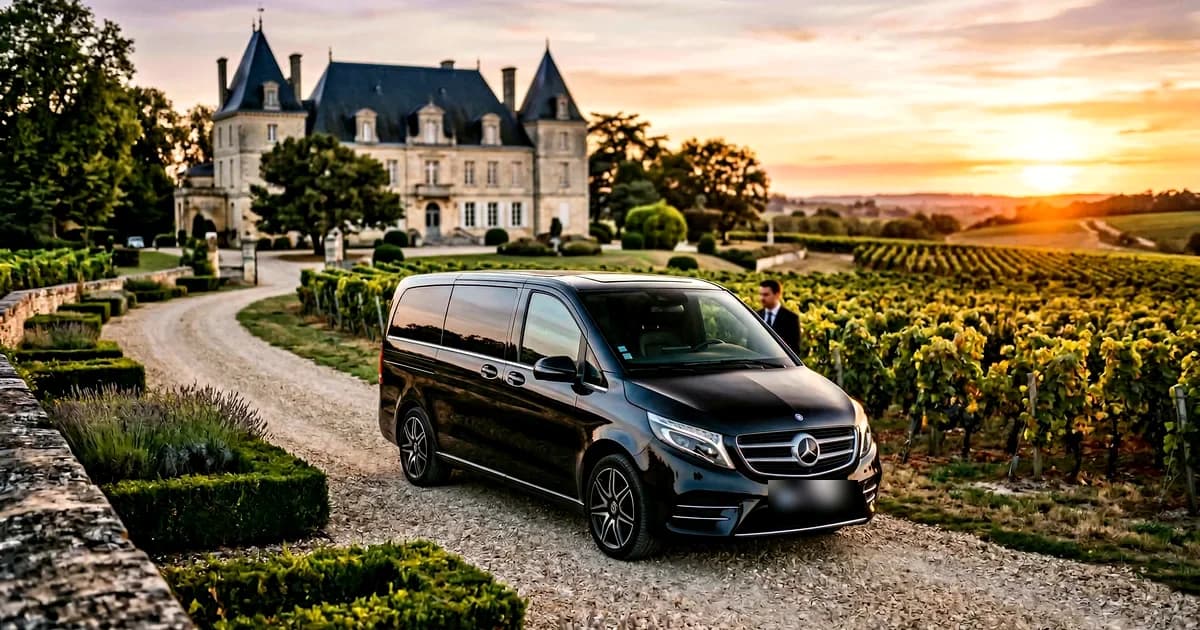
Wine tourism has one recurring failure, and it happens on the way home. Three options, in ascending order of seriousness. The hotel holds your day-one purchases overnight in cool storage, solved with one sentence at check-in. The houses ship internationally, expensive but right for magnums and old vintages that should not travel in a passenger cabin at all. And the car: a climate-controlled boot holds six bottles beside the luggage in a sedan, a case and more in the V-Class, at cellar temperature from Avize to your Paris door. An allocation negotiated at a grower’s kitchen table should not finish the journey on a luggage rack in August.
Champagne is the only great French wine that is, by construction, an argument between villages: chardonnay lift from the southern chalk, pinot spine from the mountain, river fruit rounding the middle. One day introduces you to a single voice. The second day lets you hear the argument itself, in the order the chef de cave hears it, and that is the difference between visiting a cellar and understanding a region that shipped 266 million bottles last year.
Two timing notes for 2026. Harvest keeps creeping into August (2025 opened on the 19th, early, healthy and capped at 9,000 kilos per hectare), so a late-August circuit can now catch the presses at work; check the start dates before locking that week. And each day of the circuit runs as a full chartered day, from €1,000 per day in a sedan for up to three, from €1,300 in a V-Class for four to seven passengers, tolls, parking and the cold boot included. Build your two-day Champagne circuit around the cellar bookings, or fold it into a longer Paris itinerary where the region plays the out-of-town movement.
Practical Information
Reims Cathedral (Notre-Dame)
Hours
- Daily
- 7:30 AM – 7:30 PM
- Sunday morning
- Open after Mass (~12 PM)
Prices
- EntryFree
- Tower visit€11
Last updated: 2026-07. Please verify on official websites before your visit.