Key takeaway
French car seat law for taxis and VTCs, the three ways to get a compliant infant seat at CDG or Orly, and how to book a Paris transfer with a baby.
Somewhere in the week before a Paris trip, every parent of a baby has the same quiet argument with themselves. Do you fold the car seat into a padded bag and drag it across the Atlantic, or do you trust that the car waiting at Charles de Gaulle will have the right one already fitted? The answer decides more than your packing. It decides whether the first drive with your child is legal, and whether it is safe, and in France those two things do not always mean what visitors expect.
The confusion is understandable. French rules on child restraints are strict on paper, riddled with one large exception in practice, and the exception points the opposite way from common sense. Get the reasoning straight before you book, and the seat stops being a gamble made at the kerb.
What French Law Requires Before Your Child Turns Ten
In France, children under ten generally need an approved restraint adapted to their build and weight, with regulated exceptions. Service Public explains the child-seat rules. Give the operator each child’s age, height and weight so the equipment can be confirmed before pickup.
Check the seat’s approval, size limits and fitting instructions. Rear-facing requirements depend on the approved device; do not infer compatibility from the child’s age alone. Ask the operator to confirm the equipment and installation for the assigned vehicle.
| Information to provide | What to confirm |
|---|---|
| Age, height and weight | Approved restraint suitable for this child |
| Seat model, if you bring one | Compatibility with the assigned vehicle and installation instructions |
| Passengers, luggage and pushchair | Enough seats and luggage space with the restraints installed |
Why the Taxi Rank and the Booked Car Sit on Opposite Sides of the Rule
The taxi exception in article R412-2 is not limited to a taxi hailed without a booking. It does not extend to VTC services. An exemption does not supply a suitable seat: arrange the required equipment explicitly with the operator.
That single fact reshapes the choice. It is not the reassuring logic of a professional sorting it out on the day, because the most available professional, the rank taxi, is precisely the one with no duty to. The wider logistics of a family arrival, which terminal you land in, how a pushchair survives the RER, the run out to Disneyland, we set out in the broader guide to a Paris airport transfer with children. What follows here is narrower: how you actually put a baby in a compliant seat.
Three Ways to Get a Compliant Infant Seat
Bring your own from home
If you bring your own seat, confirm the airline’s baggage conditions and give the operator its make and model before travel. Ask whether it can be installed in the assigned vehicle using the method approved by both the seat and vehicle manufacturers. Do not assume compatibility from the car’s brand or year alone.
Have the transfer company fit one
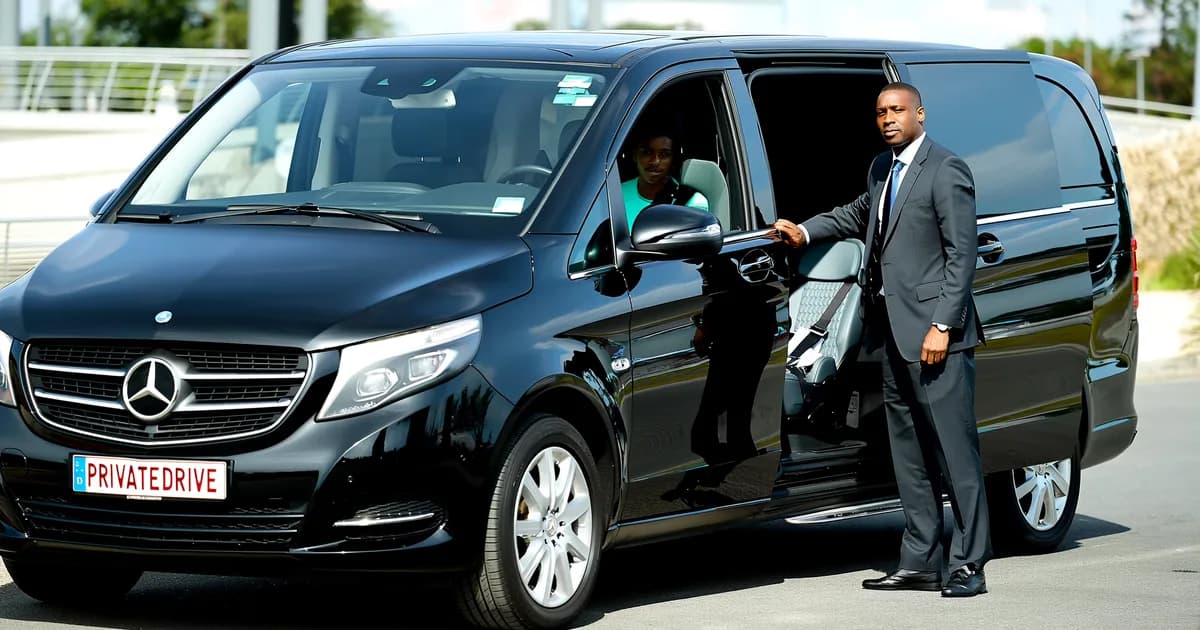
A serious private operator treats the seat as part of the booking, not a favour. The information that makes it work is specific: the child's age in months and an approximate weight, because a rear-facing carrier for a newborn and a forward seat for a two-year-old are different objects that are not interchangeable. A good answer comes back with detail of its own, the approval standard of the seat, confirmation it has been cleaned since its last use, and a driver who can actually install it. Be wary of the operator who confirms a child seat without asking a single question about the child, because that is the answer that produces a mismatched seat on the day. PrivateDrive fits infant carriers, toddler seats and boosters at no supplement, with the category confirmed against the age and weight you give at booking. What a transfer should cost once the seat is included is laid out in the guide to what a Paris transfer should actually cost.
The taxi and rideshare reality
If you choose a taxi or a booking app, request the child restraint explicitly and wait for confirmation. Availability varies by operator, vehicle and booking. A generic car category is not evidence that the correct seat will be fitted.
The Details That Separate a Calm Infant Drive from a Fraught One
Installation is a safety requirement. A rear-facing child restraint on the front passenger seat requires the airbag to be deactivated, under the applicable rules. Follow the seat and vehicle manuals for the permitted position and attachment method, whether ISOFIX or a seat belt; confirm these details with the chauffeur before departure.
The rest is timing and space. An infant drive goes best aligned to a feed, so a baby settles into the drowsy window instead of fighting it; if you land at ten and expect the car by eleven, feed on the ground if you can. Room matters too, since a pram plus a seat plus two suitcases outgrows a saloon boot, and a family of four is usually better in a V-Class. When the flight is a red-eye and the child is already spent, the calculus shifts again, which is the subject of the late-arrival transfer guide. The one thing worth paying for on that first tired walk is a driver who meets you inside the hall rather than at a distant kerb, the standard covered in what airport meet and greet actually includes.
When the Seat Becomes a Booster, and When It Goes Away
Do not treat 135 cm as a universal permission to discard a restraint. Check the child’s build, the legal rules and the manufacturer’s limits before switching equipment. If the answer is uncertain, obtain confirmation before travelling.
Strip the topic back and one variable decides everything: whether the operator treats the seat as a safety obligation or an afterthought. The law, the standards, the rear-facing months and the booster thresholds all matter, but they resolve into a single practical test at booking, which is whether anyone asks how old your child is and how much they weigh before promising a seat. A car that leaves for the airport with the right carrier already anchored turns the most anxious part of the trip into its least eventful. As the case for why the arrival sets the tone for the whole trip argues, the state you reach the city in tends to become the state the days take on, and with a baby asleep in a properly fitted seat, that state is calm.
Book a Paris airport transfer with PrivateDrive. Infant carriers, toddler seats and boosters fitted with any charge confirmed in the quote, ISOFIX confirmed for the vehicle assigned, real-time flight tracking and a named driver waiting inside arrivals. Fixed fares from €125 at CDG and €105 at Orly, requested seats and luggage configuration to confirm.